
BUSINESS
Canada’s Matched Tariffs Expose a Supply Chain It Shares
Canada’s dollar-for-dollar duties on C$27.6 billion of U.S. goods went live, after Ottawa pulled seafood and left oil.

Canada’s counter-tariffs on C$27.6 billion (about US$20 billion) of American goods took effect at 12:01 a.m. on September 8. Rates of 15, 25 and 50 per cent now sit on hundreds of U.S. product lines, from steel coil to cheddar to cotton T-shirts.
The package is Ottawa’s promised dollar-for-dollar, rate-for-rate match of the 50 per cent U.S. duties that hit Canadian goods on August 22. It also arrives after Finance Canada pulled fish and seafood off the schedule, and a day after President Donald Trump told Bombardier to build in the United States or stop selling there.
Steel, Cheese and Cotton T-Shirts, Live
Finance Minister François-Philippe Champagne announced the response on August 25 with Industry Minister Mélanie Joly, Jobs Minister Patty Hajdu and A.I. Minister Evan Solomon. The U.S. had asked too much and offered too little, the finance department said, so Canada suspended talks rather than take a bad deal.
When the United States asked too much and offered too little, we chose to stand up for Canadians. Our dollar-for-dollar, rate for rate counter-tariffs as well as a multi-billion dollar support package will protect workers, farmers, families, and businesses as we build a stronger, more resilient, and more diversified Canadian economy.
François-Philippe Champagne, Minister of Finance and National Revenue, Department of Finance Canada
The live duties apply only to goods that mark as U.S. origin. Shipments already in transit to Canada on September 8 are exempt. Existing 25 per cent surtaxes on finished American cars and trucks stay in place. There is no carve-out on the new schedule for goods that would otherwise qualify under CUSMA, the Canada-United States-Mexico deal.
Primary steel and aluminum, which had faced a 25 per cent Canadian surtax since 2025, move to 50 per cent. That matches the U.S. Section 232 metal rate. Concentrated milk and whey also sit at 50 per cent. Cheese, major appliances and sawn softwood sit at 25 per cent. Forklifts and some farm-machine parts sit at 15 per cent.
THE SEPTEMBER 8 RATE CARD
| Rate | What it covers | What changed |
|---|---|---|
| 50% | Steel and aluminum, furniture, apparel, cosmetics, milk powder, plywood, pulp and paper, video-game consoles, golf clubs | Metals doubled from 25%; several consumer lines are new |
| 25% | Cheese and curd, refrigerators, washers, dishwashers, sawn lumber, toilet paper, carpets, some rail gear | New band on the September 8 list |
| 15% | Forklifts, some lifting gear, selected farm-machine parts, some air-conditioning units | New band on the September 8 list |
Oil, gas and potash are not on the list. Auto parts remain on older orders. Remission still exists after the fact if a firm can show it cannot source the input in Canada or elsewhere, or that the duty would do severe harm.
Why Ottawa Scrubbed the Seafood Lines
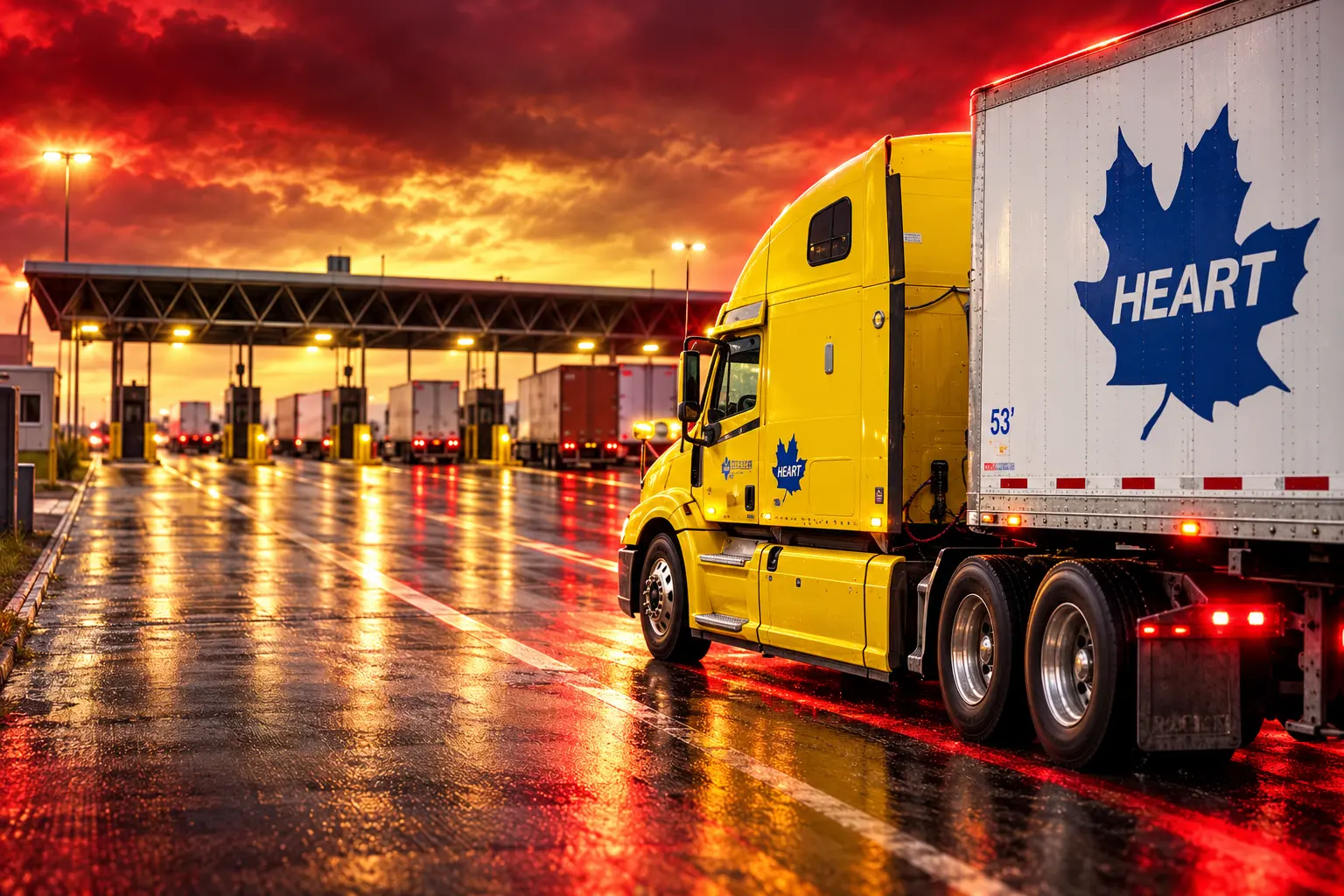
The first public list went up on August 25 with fish and seafood in it at 25 per cent. Processors on the Atlantic coast said the two industries share plants, boats and cold storage, and that a duty on U.S. lobster and salmon would land on Canadian payrolls.
American-caught lobster often moves north to be processed, then goes back into the U.S. market. Nat Richard, executive director of the Lobster Processors Association, which speaks for 25 Maritime plants, said the original tariff would have made that loop uneconomic.
I think we would have likely seen an early closure of a significant number of plants.
Nat Richard, executive director, Lobster Processors Association
Gilles Thériault, former president of the New Brunswick Crab Processors Association, said the whole Atlantic fisheries industry was relieved once the lines came off. Finance Canada said on August 26 that, based on feedback, it had made “select adjustments to protect against economic harms, including removing seafood and fish products.” Champagne later told reporters the change was in Canada’s best interests.
The department kept the dollar-for-dollar claim by adding nine products at 50 per cent, among them copper wire, wood charcoal, gypsum board, glass containers and printed photographs. The official 629-item list of U.S. products is the version that took effect. The live total is still stated as C$27.6 billion, the same figure Canada used for the U.S. hit it is matching.
That is the pattern inside the retaliation. Ottawa can tax a U.S. washing machine. It had trouble taxing a fish that crosses the border twice before it is sold.
Trump Threatened a Jet Maker With Kansas Roots
On September 7, Trump posted that there would be “NO MORE SELLING BOMBARDIER IN THE UNITED STATES,” that its products “aren’t good enough,” and that if the Montreal firm wanted the U.S. market it “must build here, and stop treating America like a ‘piggybank’.” He said more than half of its revenue comes from American buyers, airports and service, and he accused Canada of blocking Gulfstream.
No executive order, tariff schedule or Federal Aviation Administration action accompanied the post. In January he had threatened to decertify Bombardier Global Express jets and to put a 50 per cent duty on Canadian-made aircraft until Ottawa certified Gulfstream models; those steps did not land, and Canada certified several Gulfstream planes in February.
Bombardier already has a U.S. footprint that makes a clean ban messy. A company statement on September 7 said wings for “the world’s fastest business jet” are made by American workers in Red Oak, Texas, and that flight-control parts come from a Los Angeles-area plant. It listed sites in Kansas, Texas, Arizona, Florida, Connecticut, Illinois, Delaware, California, Washington, D.C. and New Jersey, plus direct jobs in more than 20 states, and said it works with about 2,800 American companies across 47 states and spends over US$2.5 billion with those suppliers each year. A new service site in Fort Wayne, Indiana, is due to open later in 2026.
The American aerospace industry is a clear winner on trade and exports. Bombardier is a strong contributor to the sector, creating tens of thousands of jobs across the United States.
Bombardier, company statement, September 7, 2026
About half of the 5,100 aircraft flown by Bombardier customers sit in the United States. Sen. Jerry Moran, a Kansas Republican, said the Wichita operation supports more than a thousand local workers in defense and aerospace and that he had called the administration to say so. A PwC-commissioned report put Bombardier’s contribution to Canadian GDP at more than C$7 billion in 2024. On September 1 the company said it would buy a Canadian wing plant from Mitsubishi Heavy Industries for the Global 5500 and 6500, a move that adds Canadian metal, not U.S. final assembly, just as Trump is demanding the opposite.
A 66.3% Share Built on a Soft Oil Month
Prime Minister Mark Carney has said he wants to cut Canada’s reliance on the U.S. market, which took about 75 per cent of goods exports before this trade fight. July’s print looks, at a glance, like that pivot arriving.
Statistics Canada said the share of goods headed to countries other than the United States was 33.7 per cent in July, which puts the U.S. share at 66.3 per cent. That is the lowest reading outside the pandemic years in the modern series. Non-U.S. shipments rose 7.4 per cent, a third straight gain, to a record $25.6 billion in non-U.S. exports, led by iron ore, nuclear fuel and crude to the Netherlands, mixed goods to China, and copper ore to Germany.
JULY’S TRADE SHIFT
- Headline surplus: The goods surplus with the world narrowed to C$769 million from C$4.2 billion in June, the fifth monthly surplus in a row.
- U.S. leg: Exports to the United States fell 6.6 per cent, the steepest drop since April 2025, on crude oil and gold; imports from the United States rose 1.8 per cent on cars and light trucks.
- U.S. surplus: The surplus with the United States shrank to C$5.9 billion from C$10.3 billion, the lowest since February 2026.
- The other 33.7%: Non-U.S. exports hit C$25.6 billion; the deficit with those countries narrowed to C$5.1 billion, the lowest since January 2021.
Total exports were C$76.1 billion, down 2.3 per cent, the first decline in six months. Imports were C$75.4 billion, up 2.2 per cent. Strip out metal and energy, and exports still rose 0.6 per cent. Aircraft and other transport jumped 34.9 per cent, with aircraft themselves up 80.1 per cent as business jets and commercial planes went to overseas buyers, a reminder that aerospace can move even as Trump targets the file.
The 66.3 per cent share is doing two jobs at once. Some of it is a real reroute: canola to China, Pakistan and Japan, copper to Germany, a third month of non-U.S. gains. Some of it is arithmetic. U.S. shipments fell hard on oil prices and gold volumes in a single month, which automatically lifts every other country’s share. Canada’s import dependence on the United States has barely moved, sitting near 59 per cent over the past 12 months against 62 per cent in 2024. The goods still come in from next door. The sales pitch is that they will, over a decade, go out somewhere else.
Workers Get Cash as Factories Lose Shifts
The duties landed on an economy that had looked sturdy into midsummer and then lost ground. GDP grew 3.3 per cent in the second quarter. From April to July, employment rose by 181,000. Then employment declined by 42,000 in August, or 0.2 per cent, and the employment rate slipped to 60.8 per cent. The unemployment rate held at 6.4 per cent.
Manufacturing added 22,000 jobs, the one clear gain, which Ottawa has tied to firms and households shifting toward made-in-Canada goods. Losses clustered in business and building support (20,000), public administration, natural resources and utilities. Statistics Canada noted a 0.9 per cent layoff rate over 12 months in industries that sell into U.S. demand. The August survey closed before the new 50 per cent U.S. duties, and before Canada’s reply, had time to show up in payrolls.
Beside the tariff list, the government put up a C$7.5 billion support package on top of nearly C$25 billion already spent since U.S. duties began.
THE C$7.5 BILLION CUSHION
- Regional cash: An extra C$1.5 billion through the Regional Tariff Response Initiative, via regional development agencies, including liquidity help for small and mid-size firms.
- Bank window: A C$500 million liquidity stream under the Business Development Bank of Canada’s Pivot to Grow program, with the revenue floor for applicants cut to C$1 million, plus forestry, steel and aluminum programs.
- Diversification fund: C$2 billion in a new Canada Strong Diversification Fund for shovel-ready capital-maintenance projects at tariff-hit firms.
- Paycheques: C$3.5 billion in Rapid Response Supports, including longer employment-insurance rules, workplace training, Job Bank upgrades, and a Worker Retention and Retraining Program so employers can keep staff.
Candace Laing, president and chief executive of the Canadian Chamber of Commerce, said businesses understand retaliation but do not want endless escalation, and that they are preparing for the dispute to last. After talks collapsed she called a “whopping, non-absorbable tariff” a body blow to North American competitiveness, the sort of duty firms cannot simply eat.
The political problem is the same as the seafood problem. A duty that is meant to punish a U.S. exporter is paid, first, by a Canadian importer, a Canadian shopper, or a Canadian plant that still needs the U.S. part. The aid package is an admission of that loop.
Canada Left Oil, Gas and Potash Untaxed
The live list is built to be seen. It taxes T-shirts, perfume, fishing rods, video-game consoles and furniture, goods that show up in a cart. It doubles the metal duty so U.S. steel cannot be dumped into Canada as a back door around Washington’s own 50 per cent levy. What it does not tax is the trade that actually binds the two capitals.
Crude, natural gas and potash stayed off the September 8 schedule. Energy is about a quarter of Canada’s goods exports, and most Canadian crude still runs south. Using that leverage would raise U.S. fuel and fertilizer costs. It would also hit Alberta and Saskatchewan, the provinces that have been least exposed to the metal and auto duties, and it would invite a U.S. reply against Canadian barrels. Ottawa chose the visible consumer list instead, then discovered that even lobster was too intertwined to touch.
The two economies are still the world’s largest bilateral goods-and-services pairing, worth nearly C$900 billion in 2025. A 25 per cent U.S. tax on Canadian cars and trucks is already in force, with extra U.S. duties on steel, aluminum and lumber, and the August 22 Section 338 wave on dairy, alcohol, hockey sticks, perfume and hundreds of other lines. Canada is answering on paper at the same dollar total. It is not answering in oil.
That choice will be read in Washington as restraint or as bluff. It is also why a matched tariff can look fierce in a press release and leak in a fish plant. The goods that are easy to tax are not the goods that would change Trump’s math.
Carney Will Sit Down When Washington Will
No negotiating round has been set since the talks broke in late August. Carney has said Canada still wants a deal that is “durable” and in both countries’ interest, and that Ottawa is ready to sit down “when the Americans are ready.” U.S. Trade Representative Jamieson Greer has said the ball is in Canada’s court: “We offered them the best deal, they looked at it square in the face and turned around.” He has also said channels are not open, and he has warned that more U.S. import bans could follow if Canada keeps hitting back.
THE 18 DAYS FROM DEAL TO DUTIES
- August 18, 2026: Negotiators close in on a framework; Trump delays the new 50 per cent U.S. tariffs so text can be finished.
- August 21, 2026: Carney suspends talks less than an hour before a midnight deadline, citing last-minute U.S. terms he called “unfair, uneconomic, and called into question the reliability of any deal.” Greer says Canada walked away from the best treatment on offer.
- August 22, 2026: The U.S. 50 per cent Section 338 tariffs take effect on C$27.6 billion of Canadian goods.
- August 25, 2026: Champagne announces Canada’s match, plus the C$7.5 billion aid package, effective September 8.
- August 26, 2026: Finance Canada removes fish and seafood and adds nine industrial items at 50 per cent.
- September 7, 2026: Trump threatens to halt U.S. sales of Bombardier jets unless production moves south; Bombardier answers with its U.S. plant list.
- September 8, 2026: Canadian counter-tariffs apply from 12:01 a.m.
Carney has said the late U.S. asks reached auto content, Canada’s right to strike other trade deals, and protections for language and culture. Greer has said Canadian negotiators came back with new requests after a tentative deal, including on trucks, and that implementation concerns, not new American terms, killed the text. Commerce Secretary Howard Lutnick’s last-minute role is one of the disputed points inside that gap.
WHERE EXPERTS DISAGREE
- Carney’s account: The U.S. changed the deal at the end, including on autos, third-country trade and cultural rules, so he pulled his team home.
- Greer’s account: Canada had the best terms of any major exporter, then added demands and walked back commitments; there are “no open channels right now.”
- Laing’s account: Whoever blinked, a non-absorbable tariff is a body blow, and firms should plan for a long fight rather than a quick signing ceremony.
The duties that went live at 12:01 a.m. do not reopen that argument. They lock in a matched rate card, a seafood-shaped hole, a jet maker with Kansas payrolls, and an export-share number that improved on oil as much as on new customers. Carney says he will sit down when Washington will. Until then the two countries will tax the goods they can bear to tax, and leave the rest of the factory floor alone.

Lerwick’s Late Dredge Is Built for Heavier Energy Ships

Skydance Closes the Warner Deal Under $80 Billion Debt

Modern Warfare 4 Hides Enemy Data to Starve Wallhacks

Apple Watch Series 12 Ships Whoop-Style Scores Without the Band

SteelSeries Arctis GameBuds Return as a $199 Color Drop

How to Dress for an Interview Men – The Dos and Don’ts of Professional Attire

Cleveland Bets on Classroom AI as New York Hits Pause

HP Wraps NVIDIA’s Chip in OmniBooks After a Share Rally

Miami-Dade Sent Rockstar a Vice City Wish List

Pinterest Turns a Shopping Guide Into a Q4 On-Ramp
-
 BUSINESS3 years ago
How to Dress for an Interview Men – The Dos and Don’ts of Professional Attire
-
 NEWS2 months ago
Cleveland Bets on Classroom AI as New York Hits Pause
-
 BUSINESS2 months ago
HP Wraps NVIDIA’s Chip in OmniBooks After a Share Rally
-
 GAMING2 months ago
Miami-Dade Sent Rockstar a Vice City Wish List
-
 NEWS2 months ago
Pinterest Turns a Shopping Guide Into a Q4 On-Ramp
-

 NEWS2 months ago
Australia Offers a Feed Switch and a Duty on Chatbots
-

 BUSINESS2 years ago
How Much Do Gymshark Athletes Make – The Income and Sponsorship of the Popular Fitness Brand Ambassadors
-

 NEWS2 months ago
Stolen Logins Now Talk to the Company’s AI Agents