
BUSINESS
Skydance Closes the Warner Deal Under $80 Billion Debt
Skydance listed as SKYD after Paramount bought Warner Bros. Discovery, with $6 billion-plus in cuts set against roughly $80 billion of debt and a 30-film floor.

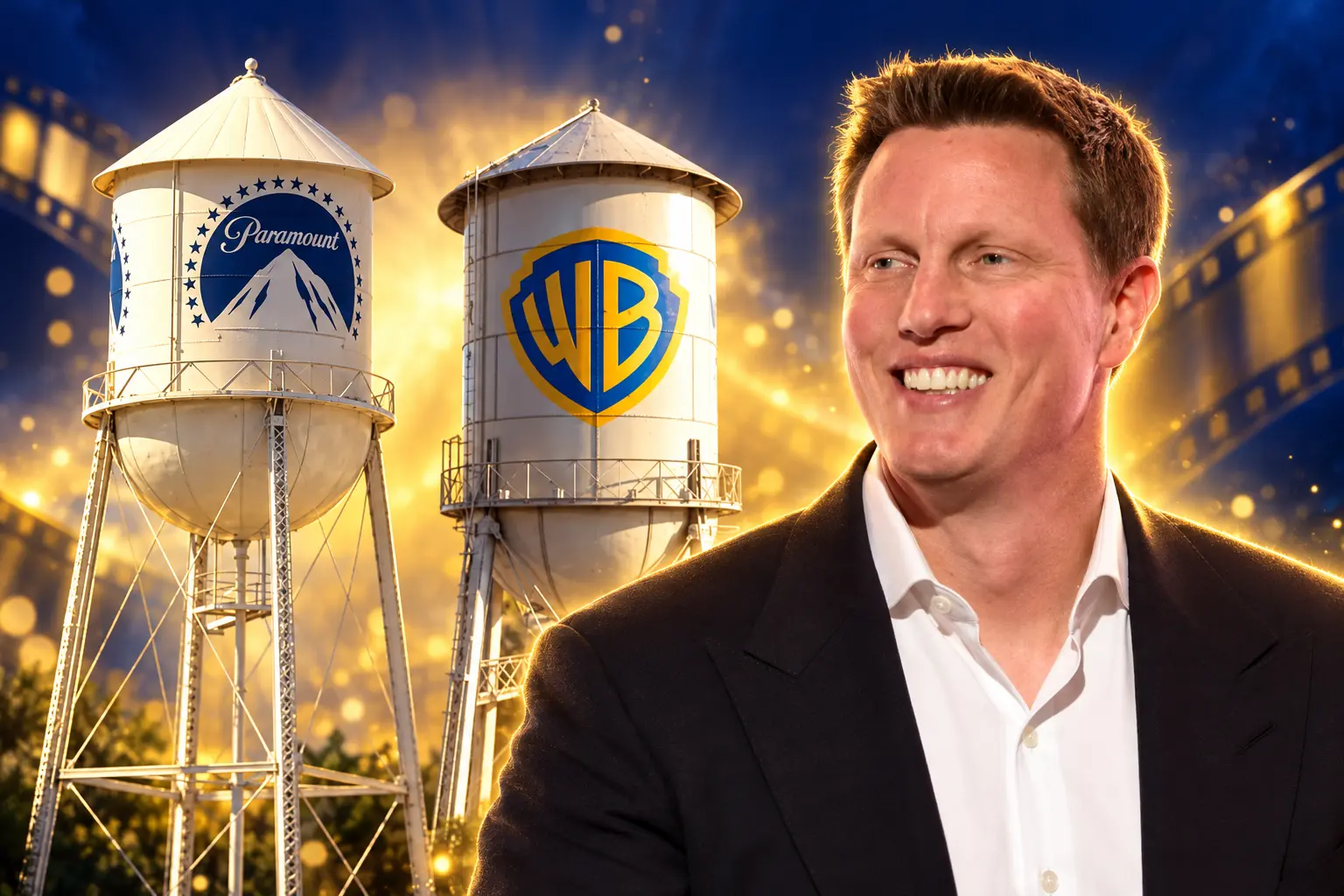
Paramount closed its $111 billion purchase of Warner Bros. Discovery on October 6, and the new parent, Skydance, listed as SKYD. Warner holders were cashed out at $31.01666668 a share. The company’s investor site showed the new Class B stock at $9.53, down 2.56%, more than 20% below the $12.00 price on $47 billion of new equity.
David Ellison, chairman and CEO, called the close a chance to build a stronger competitor. The first job is harder. Skydance is targeting $6 billion-plus in annual savings over three years while carrying roughly $80 billion of debt, and a five-year state deal bars it from shrinking the film slate to get there.
Skydance Starts Life as SKYD
The buyer was already Paramount Skydance. On October 6 it took the Skydance name, moved Class B shares to the New York Stock Exchange, and stopped Warner Bros. Discovery’s Nasdaq listing. Ellison, who founded Skydance in 2006 to finance films and later folded it into Paramount, now controls two major studios, Paramount+ and HBO Max, CBS, CNN, HBO, and a stack of cable brands from MTV to Food Network.
WBD’s board had called Paramount’s cash bid superior to Netflix’s earlier pact for the studios and streaming business, which left cable out. Ellison still has to prove the wider purchase can pay. The close statement puts the combined company at nearly $70 billion in revenue, more than 200 million streaming subscribers, and more than $30 billion of content spend over the last twelve months, with audiences in more than 200 countries.
SKYDANCE AT THE CLOSE
- Cash to WBD holders: $31.01666668 a share, with those shares off Nasdaq the same day.
- New equity: $47 billion of Class B stock priced at $12.00, led by the Ellison family, RedBird, and sovereign funds.
- Savings target: $6 billion-plus in annual savings within three years, mainly from tech, buying, marketing, and real estate.
- Debt-ratio goal: 3.0 times net debt by the end of 2029, with more than $10 billion of free cash flow by 2030.
The Ellison family holds the largest equity stake. The family and RedBird Capital are the sole holders of Class A stock, including 100% of the voting shares, so the public tape can sag without putting control in play. Gerry Cardinale, RedBird’s founder and a Skydance director, said the owner-operator model is how the group plans to run two century-old catalogs through a media market that is still shedding cable.
THE PATH TO OCTOBER 6
- February 2026: Paramount agrees to buy Warner Bros. Discovery after a bidding fight with Netflix.
- July 13, 2026: California Attorney General Rob Bonta and 11 other attorneys general sue to block the deal.
- September 21, 2026: The states settle on a five-year consent decree; a writers’ union case is resolved the same stretch.
- September 30, 2026: A federal judge signs the decree. The company prices $41.4 billion and €885 million of senior secured notes plus an $8.5 billion and €850 million Term Loan B, and names Ynon Kreiz co-CEO.
- October 5, 2026: Ellison and Kreiz name the operating team. Paramount’s old PSKY Class B listing ends at the Nasdaq close.
- October 6, 2026: The purchase closes. SKYD begins trading, and Ellison tells staff the integration will include hard calls.
Competition agencies in nearly 70 jurisdictions cleared the deal. The remaining test is whether the cash engine can service the tab without eating the movie machine the states just froze in place.
The $6 Billion Must Come From the Back Office
Skydance’s close statement says it is targeting $6 billion-plus in run-rate synergies over the next three years. The same statement says those savings will come mainly from technology, integration and procurement, marketing, and real estate, then be used to cut the net debt ratio to 3.0 times by the end of 2029.
That is a back-office bet, not a slate bet. Theatrical output is legally floored. Union contracts have to be honored. Domestic film spending has to rise. The easy merger trick of making fewer movies is off the table, so the cuts have to come from overlapping apps, ads, vendors, and offices.
THE WAGER ON THE TAPE
| Item | Figure |
|---|---|
| Deal value, including assumed debt | $111 billion |
| Combined revenue, company figure | Nearly $70 billion |
| Debt load | Roughly $80 billion |
| Annual savings target, three years | $6 billion-plus |
| Free cash flow goal, 2030 | More than $10 billion |
| New Class B equity | $47 billion at $12.00 |
| SKYD on the investor tape | $9.53, down 2.56% |
A $9.53 print against a $12.00 raise is an early mark on that math. Public holders of Class B stock are along for the economic ride, not the vote. The people who own the debt will care whether $6 billion-plus in annual savings shows up before cable fees keep sliding and the theatrical calendar stays expensive by law.
Skydance also says the two streaming apps will become one service over time. That is the other large pool of overlap. Combining Paramount+ and HBO Max can drop duplicate tech and marketing, but it also risks confusing subscribers who bought one brand for a reason. The company still trails Netflix on subscribers and YouTube on time spent, which is why Ellison wanted scale in the first place.
How Many Movies Must Skydance Release Each Year?
Under the consent decree, Skydance must release 30 films a year in the first two years and 32 a year in years three through five, with at least four independent titles each year. The close statement matches the floor of 30 theatrical films, each with a minimum 45-day theatrical window, and says the company already turns out 180-plus television series.
Bonta led attorneys general from Arizona, Colorado, Connecticut, Massachusetts, Minnesota, Nevada, New Jersey, New Mexico, New York, Oregon, and Washington. They had argued the merger would cut output and raise prices. The settlement does not force an immediate sale of a studio. It writes a production quota into a court order and attaches cash and asset penalties if Skydance misses.
Let me be clear: This settlement is not a vote of support for this merger. But we believe this settlement, which resolves our antitrust concerns in every market alleged in our case, protects competition and consumer choice, and puts workers’ needs, concerns, and futures first, is the best course of action.
Rob Bonta, California Attorney General, September 21, 2026
If the company misses the annual film count, it owes $30 million per missing title, paid toward guild health and retirement funds and antitrust enforcement, and it can be forced to sell Miramax. It also pledged at least $1.5 billion extra in U.S. film production over five years above 2025 spending, which is $300 million a year. Bonta’s office said only about 5% of Paramount’s production is in the United States now, so that floor is a real shift, not a rounding error.
WHAT THE DECREE LOCKS FOR FIVE YEARS
- Wide-release mix: 20 wide titles in each of the first two years, then 21 in each of the next three, plus four independents a year.
- Indie film fund: $5 million a year, $25 million over the term, to buy independent films.
- Worker fund: $47.5 million over five years for training and career help for people displaced by the merger.
- Cable talks: Paramount basic channels and Warner basic channels must be negotiated separately, a rule meant to keep carriage prices from rising in one bundle.
- News board: A news editorial independence board is supposed to sit over CNN and CBS News.
Theater chains had backed Ellison because they wanted volume and a 45-day window, and Tom Cruise and James Cameron lent their names to the same argument. The quota gives them that volume on paper. It also means Skydance cannot use a thin slate as a synergy lever, which is why the $6 billion-plus has to be found in functions the decree does not protect.
Ynon Kreiz Was Hired to Find the Cuts
Kreiz, the former Mattel chief, joined as co-CEO on the close. Ellison keeps long-term strategy, creative direction, talent, partnerships, technology, and how capital is allocated. Kreiz runs day-to-day operations and the integration. That split tells you where the pain is supposed to land.
At Mattel he booked more than $1.5 billion in savings through thousands of job cuts and a simpler factory plan. The toymaker topped $1 billion in adjusted EBITDA in 2021, with 19% revenue growth and a 24% share-price gain that year. Over the full tenure the stock was down 2%, against a nearly 200% rise in the S&P 500, and CFRA’s Zachary Warring noted it finished roughly where it started. Barbie, made with Warner Bros., remains the hit on his reel. Masters of the Universe, released in 2026, was a miss.
He now has to find merger savings without cutting the movie count, without walking away from union deals, and without treating U.S. production as optional. People who have worked with him describe a cost operator, not a studio whisperer. The debt holders will measure him on cash. The guilds will measure him on the quota and the $47.5 million worker fund.
Ellison put the same tension in front of staff at the first town hall on the close date. He said the companies were not combining to manage decline, then said there will be changes and impacts and that the company will move through those decisions as quickly and thoughtfully as it can. That is the language of layoffs without a headcount. Past media mergers taught Hollywood to hear it that way, and nothing in the decree forbids cutting jobs outside the film-floor and bargaining pledges.
Who Runs Film, TV, and News at Skydance
On October 5, Ellison and Kreiz published the CEO Leadership Team for Skydance. Andy Gordon is president. Dennis Cinelli is chief financial officer. Makan Delrahim is chief legal officer and president of global corporate affairs. The creative map is where the merger gets specific, and where Warner’s film chiefs did not make the cut.
Dana Goldberg and Josh Greenstein, already running Paramount Pictures, are co-chairs of the Skydance Motion Picture Group. Warner Bros. Pictures chiefs Michael De Luca and Pamela Abdy are out. That handover lands after Warner’s recent auteur bet at the box office, with the combined slate now sitting under Paramount’s film pair plus a legal minimum of 30 to 32 releases a year.
THE NEW REPORTING LINES
- Streaming: Casey Bloys, the former HBO and HBO Max chief, is co-chair and chief content officer of Skydance’s direct-to-consumer unit, adding Paramount+ and Pluto after Cindy Holland’s exit.
- Television: George Cheeks is co-chair and chief content officer of Skydance TV, covering Warner Bros. Television, CBS Studios, and Paramount Television Studios.
- Business side of TV and streaming: JB Perrette, who ran global streaming and games at Warner Bros. Discovery, co-chairs both the TV and direct-to-consumer groups on the commercial side.
- DC: James Gunn and Peter Safran stay as co-chairmen of DC Studios.
- News: Mark Thompson continues to lead CNN. Bari Weiss leads CBS News and does not also oversee CNN.
The board, effective on the close, keeps Paramount’s sitting directors and adds Kreiz plus independent seats for Laurene Powell Jobs and Bobby Kotick. Former U.K. prime minister Tony Blair is a board advisor. Sherry Lansing, the former Paramount Pictures chief, remains an independent director. The public fight that showed up around the close was less about those names than about CNN and CBS, which is the argument people brought to the announcement, not the $80 billion.
HBO Max and Paramount+ Will Merge Over Time
The close statement says direct-to-consumer products will unify into a single service over time. At a press event on the Paramount lot the same day, Ellison was plainer.
Long-term, the plan is basically to bring them together.
David Ellison, Chairman and CEO of Skydance, Paramount lot press event, October 6, 2026
He described a short first phase in which HBO Max and Paramount+ stay separate but bundled. Bloys has to keep HBO’s prestige pipeline intact while he folds in a Paramount+ catalog built on live sports, Yellowstone-style series, and library titles. Perrette’s brief is to make the commercial engine match. If they rush the app merge, they risk churn. If they wait, they leave duplicate costs on a balance sheet that is supposed to throw off more than $10 billion of free cash flow by 2030.
Cable remains the quiet problem inside that forecast. CBS, TNT, TBS, CNN, and the lifestyle networks still throw off cash, and Kreiz called the linear portfolio highly profitable even as he talked about optimizing it. Separate carriage talks for the Paramount and Warner channel groups, required for five years, make it harder to swing a single bundle at distributors. Sports rights at CBS Sports and TNT Sports are the pieces buyers still cannot skip. They are also expensive to renew.
On the lot, Ellison can point to Top Gun: Maverick and the Mission: Impossible films, the titles that made Skydance famous before it ever owned a network. Those movies were hits. The production company often ran at a loss, and this purchase layers that habit onto two aging studios and a debt stack the size of a large industrial firm. SKYD is now the ticker on that wager. The 30-film clock is running, the $6 billion-plus has to come from the back office, and the people who own the bonds will not care what the parent is named.
Frequently Asked Questions
Who Holds Voting Control of Skydance After the Merger?
The Ellison family and RedBird Capital are the sole holders of Paramount Class A common stock, including 100% of the combined company’s voting shares, so control does not sit with the NYSE Class B float. The $47 billion of new Class B equity priced at $12.00 was led by the Ellison family, RedBird, Saudi Arabia’s Public Investment Fund, L’IMAD, the Qatar Investment Authority, and LionTree.
What Happened to the Old Paramount Ticker?
Paramount Skydance voluntarily withdrew its Class B common stock from the Nasdaq Global Select Market under PSKY, and listing of those shares ended at the market close on October 5, 2026. Skydance Class B shares began trading on the NYSE as SKYD on October 6, the day the Warner purchase closed.
Does the Settlement Require Skydance to Keep a Free Streaming Service?
Yes. For five years the merged company must continue to offer a free streaming service, in the mold of Pluto TV, and keep its current service and quality. That pledge sits beside the paid plan to unify HBO Max and Paramount+ and is monitored under the same decree as the film quota.
What Is the Penalty if Skydance Misses a Year of Movie Releases?
For each film below the annual quota the company must pay $30 million, directed to union healthcare and retirement trusts and to antitrust enforcement, and a shortfall that is not cured can force a sale of Miramax to a buyer approved by a state committee. An independent monitor, an internal compliance monitor, and a five-state oversight group watch the decree.
How Does the U.S. Production Floor Change if Tax Credits Pass?
The $1.5 billion extra spend is a baseline above 2025 U.S. levels. If a federal film tax credit of at least 20% becomes law, U.S. work would have to reach 20% of all film production in years one and two and at least 30% after that. If California or New York also passes a broader state credit, the U.S. share would have to rise to at least 40%.
SKYD is now a live stock with a 30-film legal calendar and a co-CEO hired to take costs out of everything that calendar does not protect. The next prints will show whether $6 billion-plus in back-office savings can carry a tab that size.
Disclaimer: This article is news reporting and analysis of a completed corporate merger and the public financial figures around it. It is informational only and is not investment advice, a recommendation to buy or sell SKYD or any other security, or a forecast of Skydance’s earnings, debt capacity, or share price. Readers who are considering an investment, a credit decision, or any other financial action tied to this company should consult a licensed financial adviser or another qualified professional who can review their own situation. Share prices, debt balances, synergy targets, and legal compliance statuses reflect the company statements, court papers, and market quotes cited here and can change.

Lerwick’s Late Dredge Is Built for Heavier Energy Ships

Skydance Closes the Warner Deal Under $80 Billion Debt

Modern Warfare 4 Hides Enemy Data to Starve Wallhacks

Apple Watch Series 12 Ships Whoop-Style Scores Without the Band

SteelSeries Arctis GameBuds Return as a $199 Color Drop

How to Dress for an Interview Men – The Dos and Don’ts of Professional Attire

HP Wraps NVIDIA’s Chip in OmniBooks After a Share Rally

Miami-Dade Sent Rockstar a Vice City Wish List

Canada’s Matched Tariffs Expose a Supply Chain It Shares

Australia Offers a Feed Switch and a Duty on Chatbots
-
 BUSINESS3 years ago
How to Dress for an Interview Men – The Dos and Don’ts of Professional Attire
-
 BUSINESS1 month ago
HP Wraps NVIDIA’s Chip in OmniBooks After a Share Rally
-
 GAMING1 month ago
Miami-Dade Sent Rockstar a Vice City Wish List
-
 BUSINESS1 month ago
Canada’s Matched Tariffs Expose a Supply Chain It Shares
-
 NEWS1 month ago
Australia Offers a Feed Switch and a Duty on Chatbots
-

 NEWS1 month ago
Stolen Logins Now Talk to the Company’s AI Agents
-

 NEWS1 month ago
Pinterest Turns a Shopping Guide Into a Q4 On-Ramp
-

 BUSINESS2 years ago
How Much Do Gymshark Athletes Make – The Income and Sponsorship of the Popular Fitness Brand Ambassadors